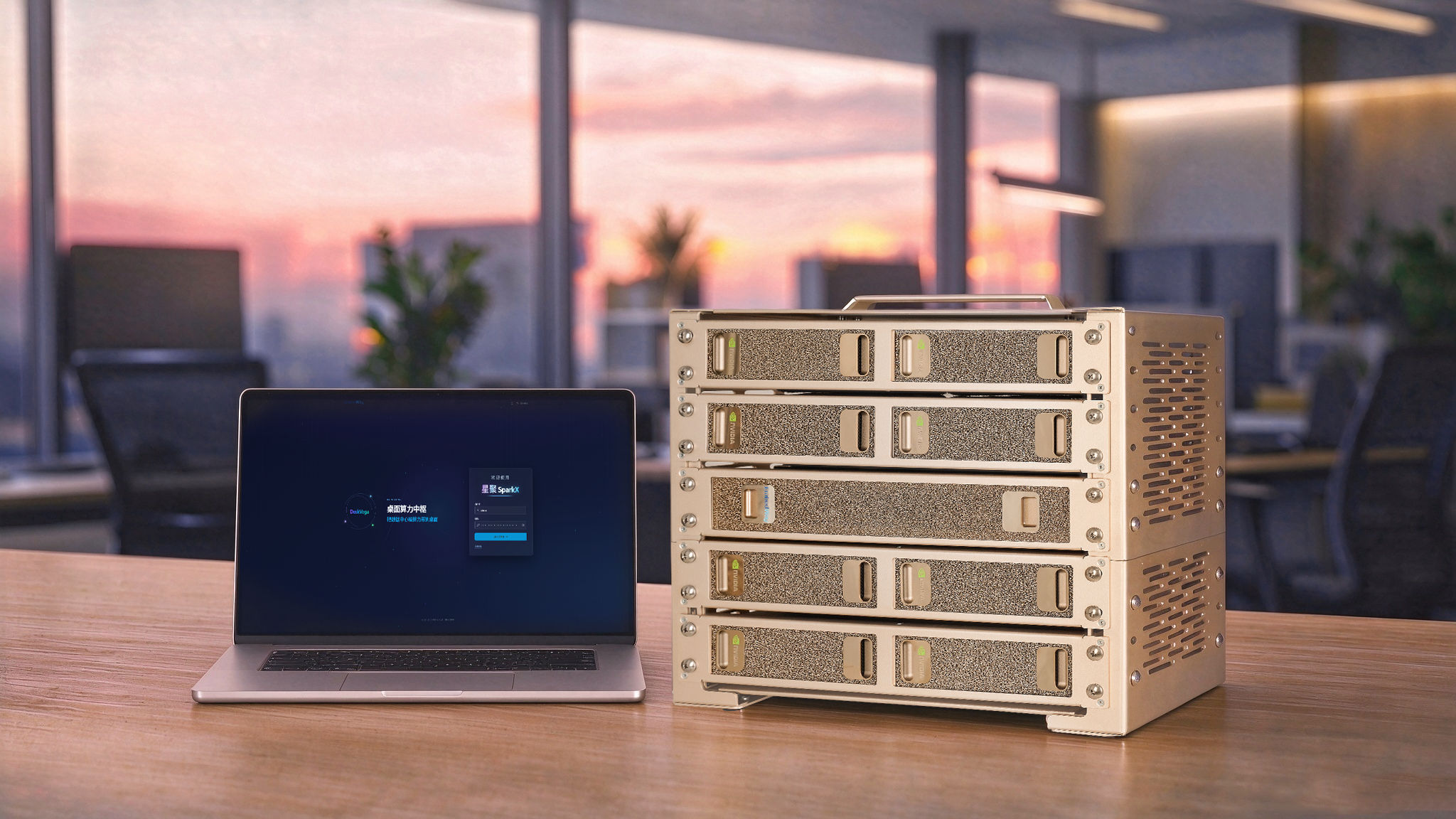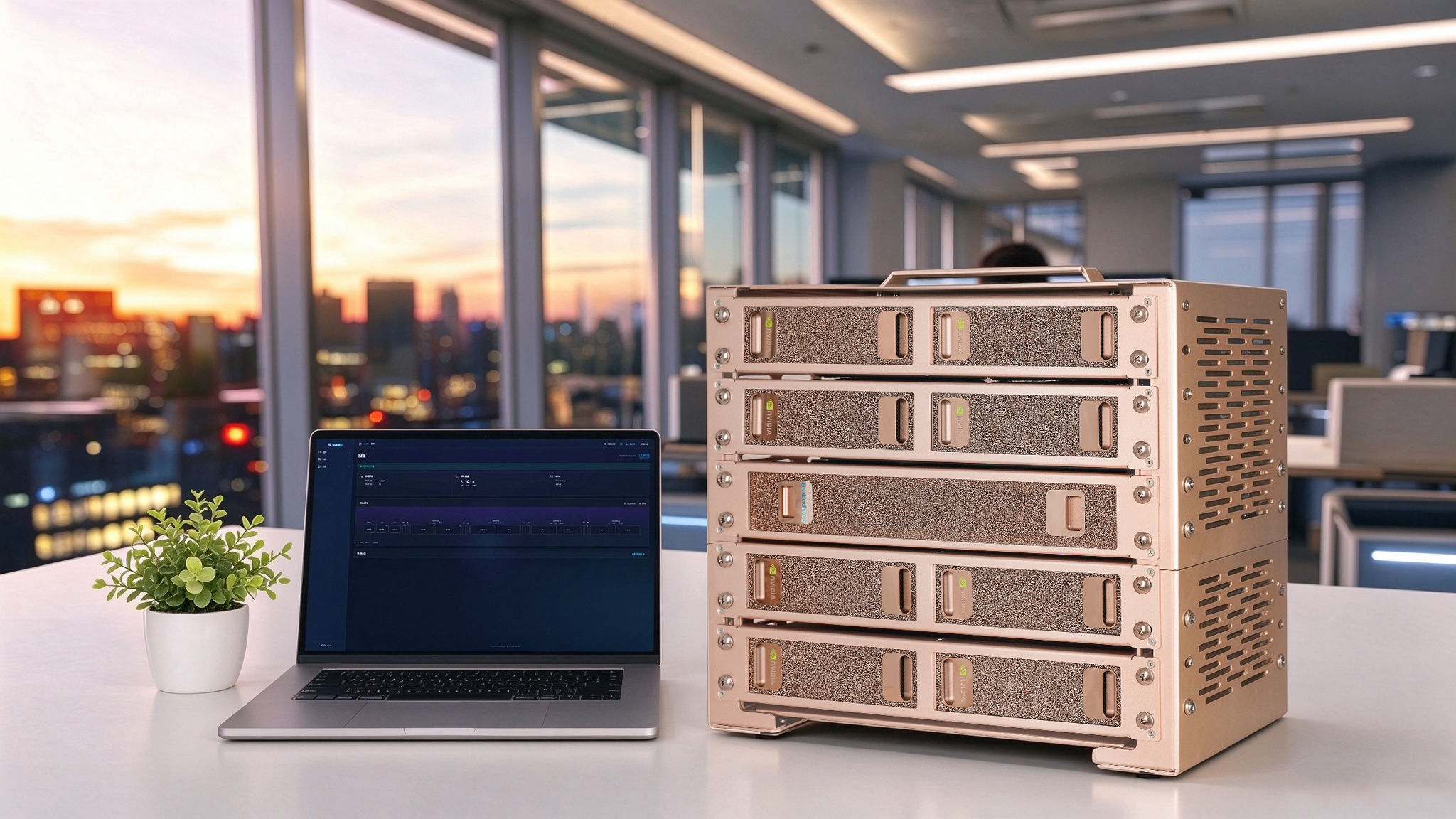

Data-center class compute, place on enterprise desks
With SparkX as the high-speed interconnect hub, 4 or 8 NVIDIA DGX Spark units form an on-premise AI cluster that runs mid-to-large models on a single desk. No dedicated server room, configurations that scale with your needs, and an AI compute foundation that is usable, expandable and keeps data inside your network.
Desktop scale. Boundless compute. Models at hand.
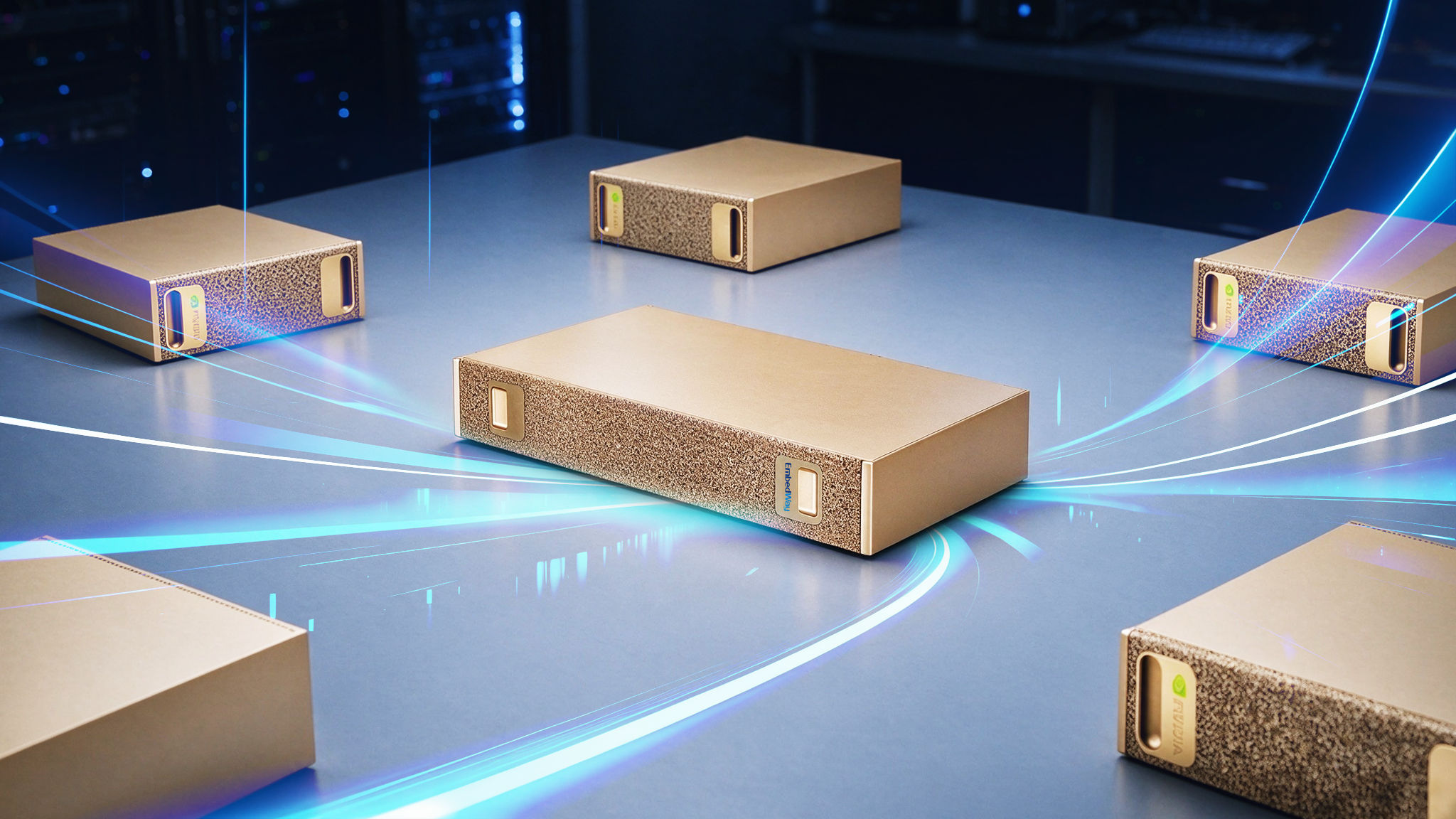
Two standard DGX Spark configurations
SparkX single-port interconnect bandwidth
Unified memory per DGX Spark
NVMe storage per DGX Spark
Figures are nominal single-device or single-port specifications. Actual cluster performance depends on the model, precision, parallelism strategy and software configuration.
LLMs are becoming production infrastructure, yet private deployment remains hard
From knowledge Q&A to autonomous agents, enterprises want LLMs in real business workflows. Traditional GPU servers and cluster solutions come with high investment, long lead times, heavy operations and data-egress concerns. DeskVega offers a local AI path that starts from a single office desk.
High compute barrier
Traditional GPU servers and clusters require substantial investment; a one-off purchase often leaves enterprises torn between “not enough compute” and “over-provisioned”.
Long deployment cycles
Procurement, server-room renovation, network configuration and environment setup are interlinked. Traditional projects can take weeks or months, leaving business needs waiting.
Skills gap
Model adaptation, cluster tuning and troubleshooting require specialized experience. Without a dedicated AI operations team, many enterprises struggle to maintain the system.
Data security concerns
Contracts, source code, customer records and business data are highly sensitive. With public cloud or SaaS services, enterprises must additionally assess data leakage, permission management and compliance audit risks.
What enterprises need is not just more GPUs, but a complete solution that deploys quickly, runs continuously and matches data security requirements.
One interconnect hub + multiple compute units = a desktop AI computing center
DeskVega uses SparkX as the high-speed interconnect hub to cluster multiple NVIDIA DGX Spark units into a desktop AI cluster, combined with compute scheduling, model deployment, monitoring and optimized models — a complete path from hardware interconnect to running models. Compute units are recognized automatically once connected; standard configurations cover 4 and 8 DGX Spark units and can scale further through a modular architecture. Inference and fine-tuning run locally, so business data stays inside the enterprise network.
5. Application layer
Hosts private knowledge bases, coding assistants, digital workforce and industry agents.
4. Model layer
Installs adapted and optimized models per configuration, supporting local inference and fine-tuning; refer to the model center for the exact models and versions.
3. Scheduling & operations layer
Unified management of compute scheduling, model deployment, status monitoring and daily operations, lowering the barrier to cluster usage.
2. Compute resource layer
NVIDIA DGX Spark units in standard 4- or 8-unit configurations, providing local AI compute, unified memory and NVMe storage.
1. High-speed interconnect layer
SparkX hub with 200Gbps RoCE interconnect linking multiple DGX Spark units and carrying inter-node model-parallel traffic.
A security boundary across every layer: models, data and business applications can all be deployed in the enterprise's own environment, so data does not leave the internal network.
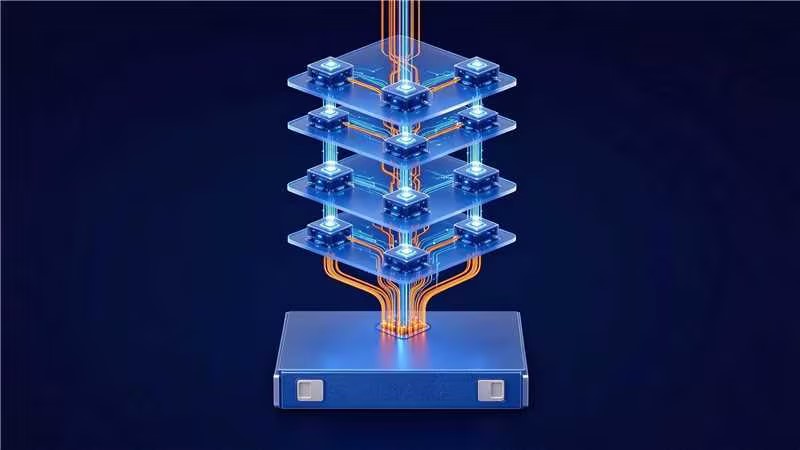
Ready to use: pre-integrated and pre-optimized, reducing hardware selection, environment setup and model adaptation work.
Data stays on-premise: inference, fine-tuning and business data processing all run locally.
Smooth expansion: from 4 to 8 units, and further as the business grows.
Two core components, pre-integrated and pre-optimized
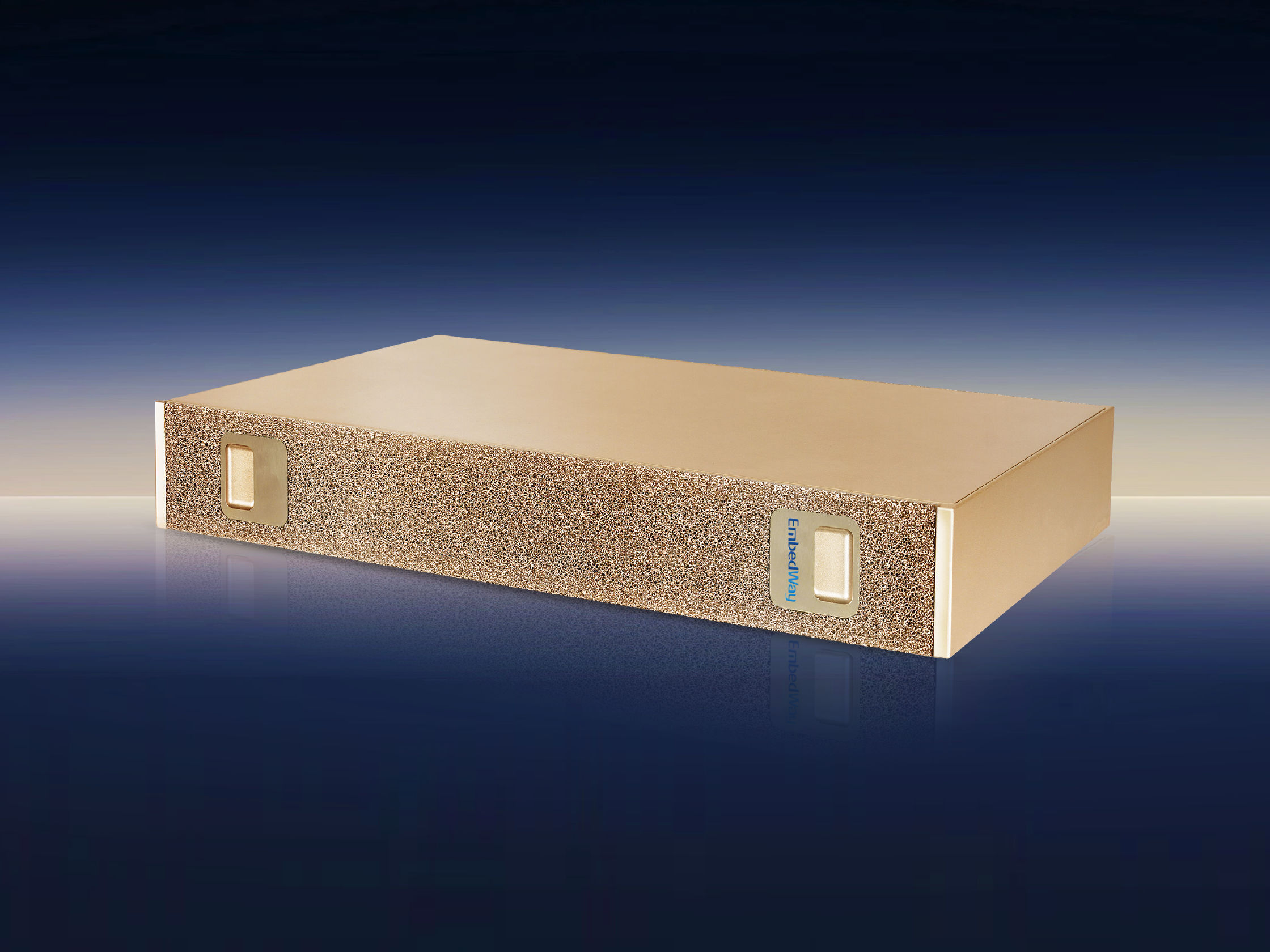
Component 1: SparkX — desktop compute hub
The interconnect core of the whole solution, designed for DGX Spark clusters.
- High-speed interconnect
- 200Gbps per port with RoCE v2 lossless networking, supporting inter-node tensor-parallel communication
- Network interfaces
- 4 × QSFP-DD (expandable to 8 × 200Gbps QSFP56)
- Switching capacity
- 4.8Tb/s switching capacity
- Desktop deployment
- Compact chassis fits on a desk or in a small cabinet, with no server-room requirements
- Quiet and efficient
- 120W typical power consumption, ≤40dB quiet design
- Plug and play
- Compute units are recognized and clustered automatically once connected
- Unified management
- Works with the solution software for compute scheduling, model deployment and monitoring
Turns multiple desktop AI compute units into a single cluster.
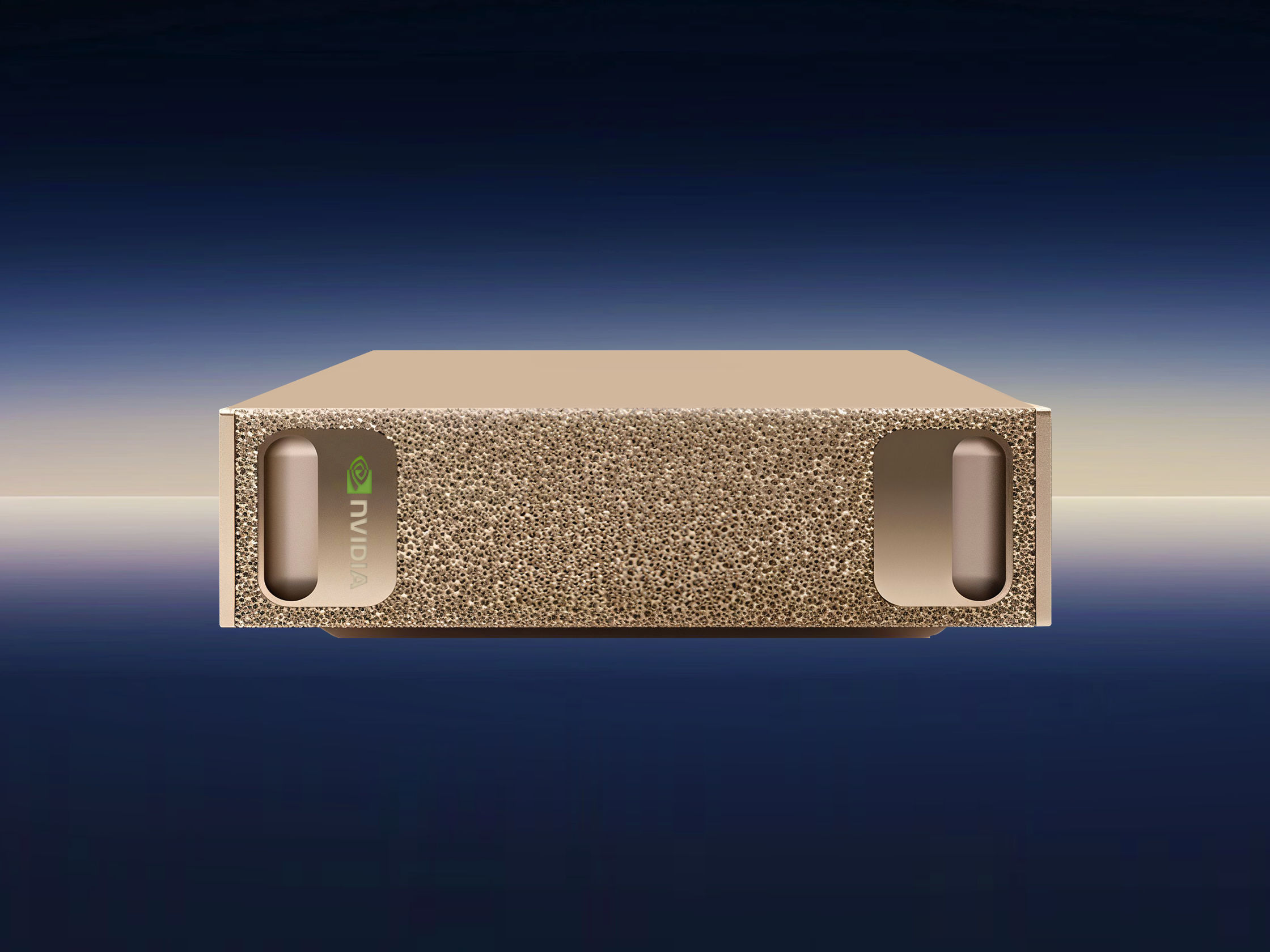
Component 2: NVIDIA DGX Spark — desktop AI supercomputing unit
Provides the compute, memory and storage for local model inference, fine-tuning and AI development.
- Core chip
- NVIDIA Grace Blackwell GB10 superchip
- AI compute per unit
- 1 PFLOPs (FP4)
- Unified memory per unit
- 128GB
- Storage per unit
- 4TB NVMe
- Weight per unit
- 1.2kg
- Dimensions per unit
- 150 × 150 × 50.5mm
Combines a desktop form factor with local LLM compute.
SparkX handles connectivity and speed; DGX Spark handles compute and capacity; DeskVega brings them together into a deliverable, usable enterprise AI compute foundation.
Two standard configurations — start small, scale smoothly
DV1004 and DV1008 cover everything from a typical first local deployment to higher resource requirements.
| DV1004 | DV1008 | |
|---|---|---|
| Composition | 4 × DGX Spark + 1 × SparkX | 8 × DGX Spark + 1 × SparkX |
| DGX Spark nodes | 4 units | 8 units |
| Total AI compute (sum of nominal node values) | 4 PFLOPs (FP4) | 8 PFLOPs (FP4) |
| Total memory (sum of nominal node values) | 512GB | 1TB |
| Total NVMe storage (sum of nominal node values) | 16TB | 32TB |
| Reference models in source material | DeepSeek V4.1 Flash, 552B parameters | GLM 5.2, 744B parameters |
| Recommended direction | For starting with local inference, knowledge bases and developer productivity | For larger models, higher resource demands or more concurrency |
Note: combined compute, memory and storage figures are arithmetic sums of nominal per-node values and do not represent a single process's unconditional usable pool. The models you can run, context length, concurrency and throughput depend on model precision, parallelism strategy, network, storage and software configuration, and are subject to official specifications and test results. Reference models and versions must be re-verified against the latest compatibility list before publication.
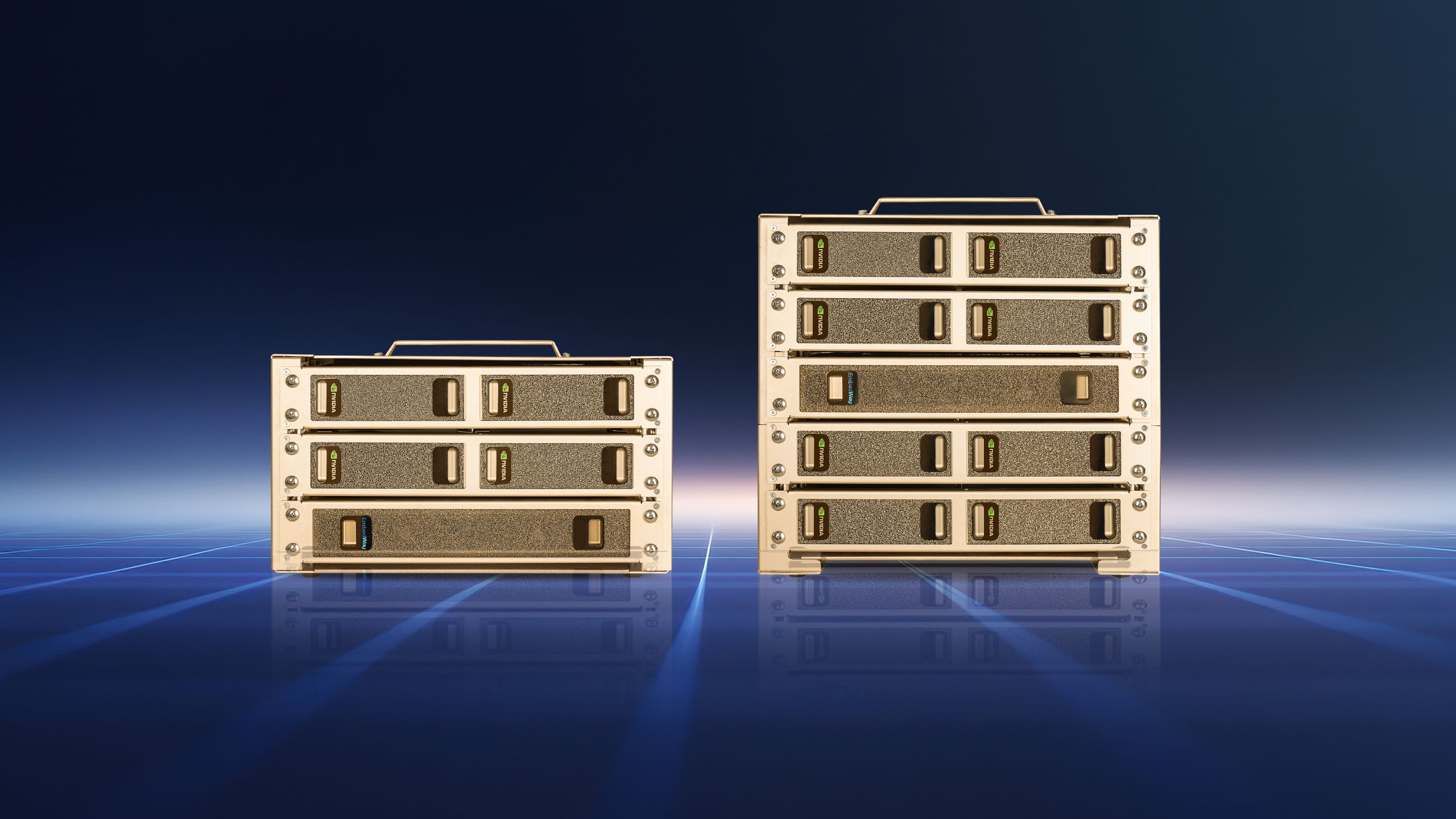
The traditional “all at once” procurement model exposes enterprises to over-investment risk. DeskVega uses a modular, elastic architecture: start with the configuration that matches current business scale, then expand as models, users and scenarios grow — protecting existing investment.
From “buying hardware” to “gaining AI capability”
Stackable compute, flexible investment
From 4 to 8 units and beyond, DeskVega's modular architecture supports horizontal expansion. Start with the scenario you need most, avoid a heavy one-off capital decision, and keep compute investment aligned with business growth.
Flagship models running locally
Through multi-node high-speed interconnect and model adaptation, DeskVega addresses on-premise deployment of mid-to-large models, letting enterprises run knowledge Q&A, code generation, support agents and industry agents inside their own network. Supported models and parameter scales are subject to the official model center.
Dramatically simpler deployment, from server room to desktop
No dedicated server room: deploy in an ordinary office without precision air conditioning or room renovation. Pre-integrated delivery covers device interconnect, base environment and optimized model installation — power and network are all it takes to start. Unified management handles compute scheduling, model deployment and monitoring in one place, lowering daily operating effort.
A deployment that traditionally takes weeks to months is compressed into hours. Actual delivery time depends on the on-site network, application scope and acceptance requirements.
All data local, a clearer security boundary
Model inference, fine-tuning and business data processing all run locally, so data does not leave the enterprise network. This reduces the need to send sensitive data to external services and makes it easier to manage AI applications under existing permission, audit and security policies.
For data-sensitive industries such as finance, manufacturing, healthcare and government, DeskVega provides an on-premise AI compute foundation that helps enterprises meet data localization and internal security management requirements. Specific compliance conclusions still depend on application workflows, data types, governance policies and applicable regulations.
More controllable cost, continuous TCO optimization
On-demand configuration reduces upfront investment, desktop deployment lowers server-room and infrastructure costs, and pre-integration plus unified management cut implementation and operations workload — keeping compute investment in step with real business needs.
Continuous tuning, more performance from the same hardware
DeskVega provides more than hardware interconnect — tuning continues across models, parallelism strategies and inference parameters. Cluster tests in the source material show a substantial throughput gain for the optimized version over the initial out-of-box build.

Before vs. after tuning
18.6×
On the same hardware, total throughput of the optimized version reaches 18.6× the out-of-box build.
Test conditions: concurrency = 1; optimized test configuration ISL = 17K, OSL = 200, Cache Hit Rate ≈ 90%. Left: initial out-of-box performance. Right: current optimized version.
High-concurrency test data
| Test configuration | Concurrency | Total | TTFT | TPOT |
|---|---|---|---|---|
| Configuration 1 | 16 | 32,504 token/s | 1,137ms | 41ms |
| Configuration 2 | 8 | 9,056 token/s | 1,441ms | 54ms |
Supporting note: the source tests cover 8–16 concurrent sessions. The team continues to tune and iterate on optimized builds.
Metric definitions
Total
Total throughput during the test period.
TTFT
Time to First Token — how long a user waits for the first output after sending a request.
TPOT
Time per Output Token — the average interval between subsequent generated tokens.
Performance note: the figures above come from existing solution material and describe performance only under the stated test conditions. Hardware node count, model names, model precision, software versions and the full test methodology for “Configuration 1 / Configuration 2” must be completed before formal publication. Results may differ with other models, input/output lengths, cache hit rates and concurrency levels.
From digital workforce to industry agents — local compute in real business
DeskVega provides the on-premise AI compute and optimized model foundation. Enterprises, industry solution providers and integrators can build knowledge bases, RAG engines, business systems and industry applications on top of it.
AI digital workforce
Build 24/7 digital employees that handle support replies, copywriting and data organization — running locally with controllable cost.
Industry agent clusters
Multiple agents collaborate on complex business processes, automating the chain from data collection to decision execution, with local execution protecting business data.
Private portable token center
Your desktop becomes the compute outlet, giving teams on-demand private token services without dependence on public cloud APIs, with transparent and controllable cost.
Scenario note: these are typical application directions DeskVega can host. Knowledge bases, support systems, coding platforms and agent applications can be deployed and customized by customers, industry solution providers or integrators, and are not implied to be included out of the box with the hardware.
One desktop compute foundation for many industries
Enterprises can build upper-layer applications around their own data, knowledge and business processes. DeskVega provides local compute, cluster interconnect and the model runtime foundation; industry solution providers and integrators can complete the business integration.
LLM experiments, course teaching, shared lab resources
Build a lab-level desktop research cluster, reducing reliance on external supercomputing resources and supporting model experiments and teaching demos
Internal knowledge Q&A, support and agent assist, developer productivity
Process business knowledge and R&D data locally, providing a deployment foundation for permission management, auditing and data localization
Medical literature and policy Q&A, research assistance, internal knowledge management
Deploy models and knowledge applications inside the hospital or institutional network to reduce sensitive data egress; not intended as a basis for diagnostic conclusions
Private knowledge base, support agents, coding assistance, AI application validation
Take a desktop, lightweight first step into local AI, choose a configuration by business scale and expand gradually
Built for teams that need local LLM capability without building a traditional server room
AI startups and enterprise R&D
Suited to AI startups, enterprise algorithm teams and innovation units of 3–20 people, for local LLM inference and fine-tuning, private deployment of vertical models, and data-sensitive AI application development.
Universities and research labs
Provides labs with a desktop research cluster for LLM experiments, teaching and prototype validation, reducing resource queues and external environment dependency.
Vertical-industry SMBs
For SMBs in healthcare, legal, finance and manufacturing, hosting local knowledge bases, industry models and intelligent applications while balancing data security and manageable investment.
Individual developers and enthusiasts
For advanced users who want a local LLM experience and compute autonomy, providing a desktop compute foundation for model research, AI development and content creation.
Enterprise performance × lightweight investment × desktop form factor — so more teams can own their own local AI compute.
Not just hardware — a complete path from compute foundation to model optimization
Embedway has deep expertise in network communications and intelligent computing, with capabilities across high-speed interconnect, embedded computing and AI acceleration. DeskVega combines the in-house SparkX hub, DGX Spark compute resources and model adaptation to reduce duplicated work in hardware selection, environment setup and performance tuning, so delivery effort goes back to real business value.
Recommended process
- 1
Requirements assessment: define target models, application scenarios, concurrency scale, context length, data security requirements and the existing network environment.
- 2
Configuration selection: choose DV1004, DV1008 or discuss a later expansion plan.
- 3
Deployment and model adaptation: complete device interconnect, base environment setup and adapted model installation, and validate local inference.
- 4
Application integration and acceptance: the customer or partner connects knowledge bases, business systems and industry applications, followed by acceptance testing against agreed scenarios.
- 5
Training and ongoing support: product training, technical support and version updates to support continued use and expansion.
Value for three partner types
Channel partners: a new entry into the SMB AI market
A desktop, lightweight, ready-to-use solution that matches SMB budgets and technical capability, lowering sales and delivery barriers and forming a repeatable productized path.
Industry solution providers: a compute foundation for vertical scenarios
Layer industry knowledge bases, RAG engines, support agents and business applications on top of DeskVega to form an integrated “industry scenario + local compute + optimized model” offering.
System integrators: pre-integrated delivery, lower project risk
Reduce project effort spent on hardware selection, environment setup, model adaptation and tuning, and focus resources on business customization, system integration and customer value delivery.
Five partner support programs
- Product training: solution architecture, product features and delivery process.
- Technical support: pre-sales solution support and post-sales operations response.
- Marketing materials: product collateral, solution white papers and promotional assets.
- Demo environment: sample unit testing eligibility and a demo environment for customer POCs.
- Joint marketing resources: joint events and marketing resources to expand regional and industry customers together.
Frequently asked questions
Q1. What is the DeskVega Desktop AI Computing Center?
DeskVega is a desktop, lightweight, on-premise AI compute solution. With SparkX as the interconnect hub, it clusters 4 or 8 NVIDIA DGX Spark units and adds model installation, compute scheduling, model deployment and monitoring capabilities to support local LLM applications.
Q2. Does DeskVega require a dedicated server room?
The standard solution is designed for ordinary office environments and does not require a dedicated server room or precision air conditioning. Deployment still must meet the product's power, cooling, network, floor-loading and safety requirements, following the official installation guide.
Q3. How do I choose between 4 and 8 units?
Consider the target model and parameter scale, quantization precision, context length, concurrent users, latency targets and storage needs. The 4-unit configuration fits a typical first local deployment; the 8-unit configuration targets higher resource requirements. Use a requirements assessment or POC to confirm the final configuration.
Q4. Which models can DeskVega run?
DeskVega currently supports adapted models including DeepSeek V4.1 Flash and GLM 5.2. The models, versions, quantization methods and runtime configurations available will keep evolving; refer to the official model center for the latest information.
Q5. Does data leave the enterprise network?
The solution supports model inference, fine-tuning and business data processing locally, reducing the need for sensitive data egress. The actual data boundary also depends on whether the customer connects external APIs, cloud services or remote operations channels, which must be configured and reviewed during deployment.
Q6. Does DeskVega include knowledge base, support and agent applications?
DeskVega provides local compute, cluster interconnect and the model runtime foundation. Enterprise knowledge bases, support systems, coding platforms and industry agents can be deployed, integrated and customized by the customer or partners; the exact delivery scope is defined by the project plan.
Q7. Can compute be expanded later?
The solution uses a modular, elastic architecture with horizontal expansion capability. Expansion scale, compatible models, software licensing and upgrade paths must be confirmed against the current product version and official technical plan.
Q8. Do the performance figures apply to every scenario?
No. Performance depends heavily on the model, quantization precision, input/output lengths, cache hit rate, concurrency, parallelism strategy and software version. Published figures apply only to their stated test conditions; run a POC with your actual workload before going live.
Let AI compute truly reach every enterprise office
Contact us for detailed solution materials, configuration advice and sample unit testing eligibility. Whether you want to validate a single AI scenario or build a complete industry solution, DeskVega can start from one office desk.